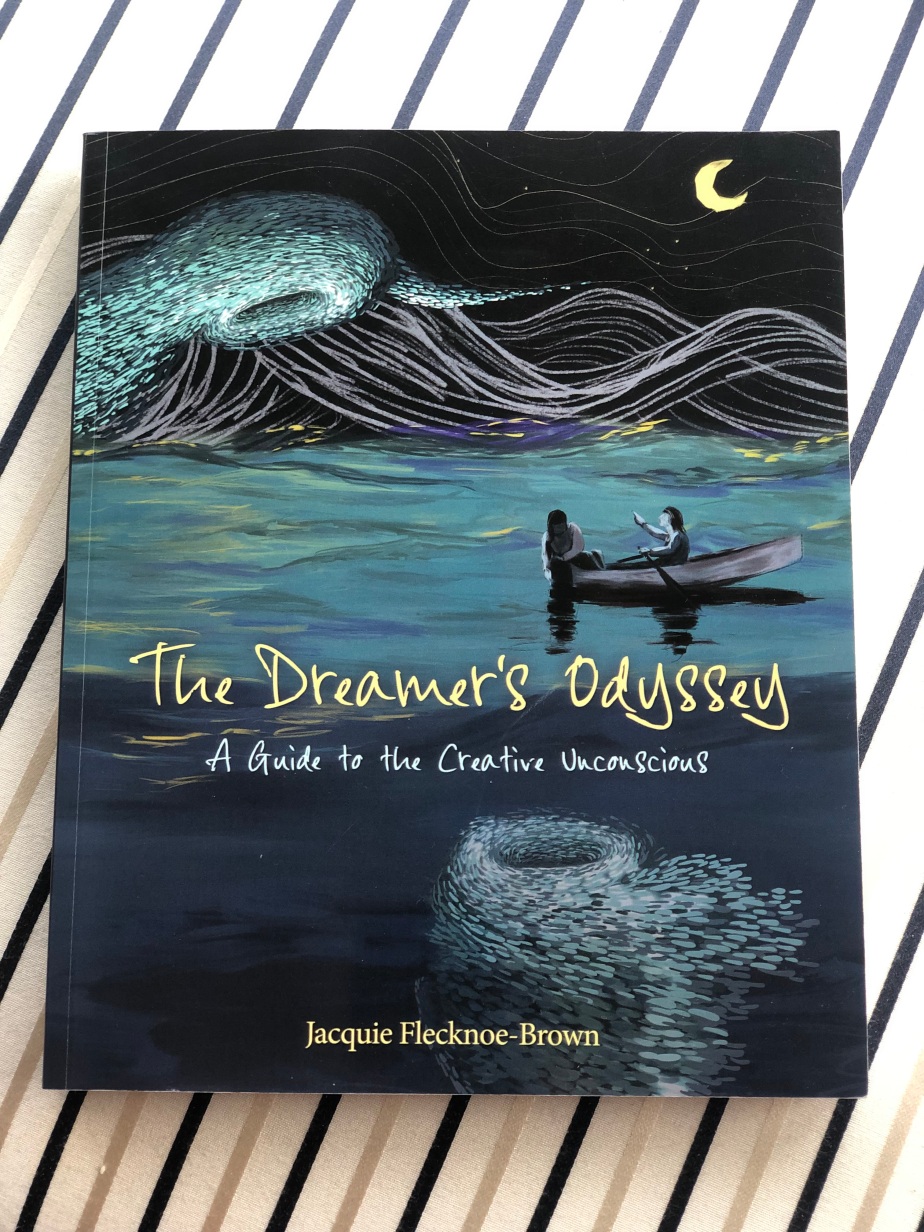
Disclaimer – We received this item free for the purpose of this review/feature but all words and opinions are our own.
Have you ever wondered what your dreams mean? Or have you looked into their meaning and got lost, unable to identify what the dream book is trying to tell you? Jacquie Flecknoe-Brown’s book The Dreamer’s Odyssey uses Carl Jung’s finding to read into the symbolism of dreams. The book relies heavily on Jung’s work and goes into depth about how to read your dreams, work with symbols and mythology and updates the reader on findings from more recent studies.
Jacquie Flecknoe-Brown works as a Jungian Analyst in Melbourne, Australia and has a wealth of knowledge about dream deciphering. The book is cleverly divided into 10 weeks, starting with the background on dream analysis but explaining how important it is to keep a record of your dreams, even if you wake up in the middle of the night and think you’ll remember It (you won’t!) and explains how to make a diary of dreams. Interestingly, when you make the decision to start analysing your dreams, that first night’s dream is very significant, so pay attention to the details in order to be able to analyse the meaning not only the next day, but in several weeks or months in the future. Buying a diary or journal specifically for dream analysis would be really advantageous whilst working through the book, and brings up a lot of interesting ideas for you to deal with.
The whole book is split into 10 chapters, with each chapter relating to 1 weeks’ worth of work into your dream analysis. The first few chapters teach you about the structure of dreams; a beginning, middle and end and what all dreams contain in terms of certain content. This could be events from the day, themes in your life or some kind of symbolism, which is specific to your background or culture. Most of the chapters have a sub-section where counsellors and professionals can gain further information into that chapter and how Jung researched or identified certain issues and patterns. It’s not so in depth though that it can’t be understood by you and me, and there are ideas in each chapter that you can come back to. Luckily, there’s also a section in each chapter for some personal writing to make notes on what you’ve read or perhaps how it related to one of your specific dreams. The book also has exercises to help you understand some of the theories, which is also useful as you start to take dream analysis more seriously.
The second half of the book related to The Method. This is more about how to analyse dreams rather than just explaining the background to analysis or how to record our dreams. It goes into depth about individual’s psychology and whether you’re an introvert or extravert, in the terms of Jung’s work, not necessarily what we understand of the meanings today. Examples of dreams are also dotted around the text to help you hone your analysis skills which is also helpful. Lastly, the final chapters are called Making It Real and talk about putting your analysis into practice and using what you’ve learned.
The Dreamer’s Odyssey is a fascinating book with real depth and useful exercises, making use of an endless too – your own dream world, to be able to analyse your life and your world. It’s a skill that will last a lifetime and the bonus of having the Jungian teaching explained in detail makes the book even more useful and worthwhile.
 The Review Studio