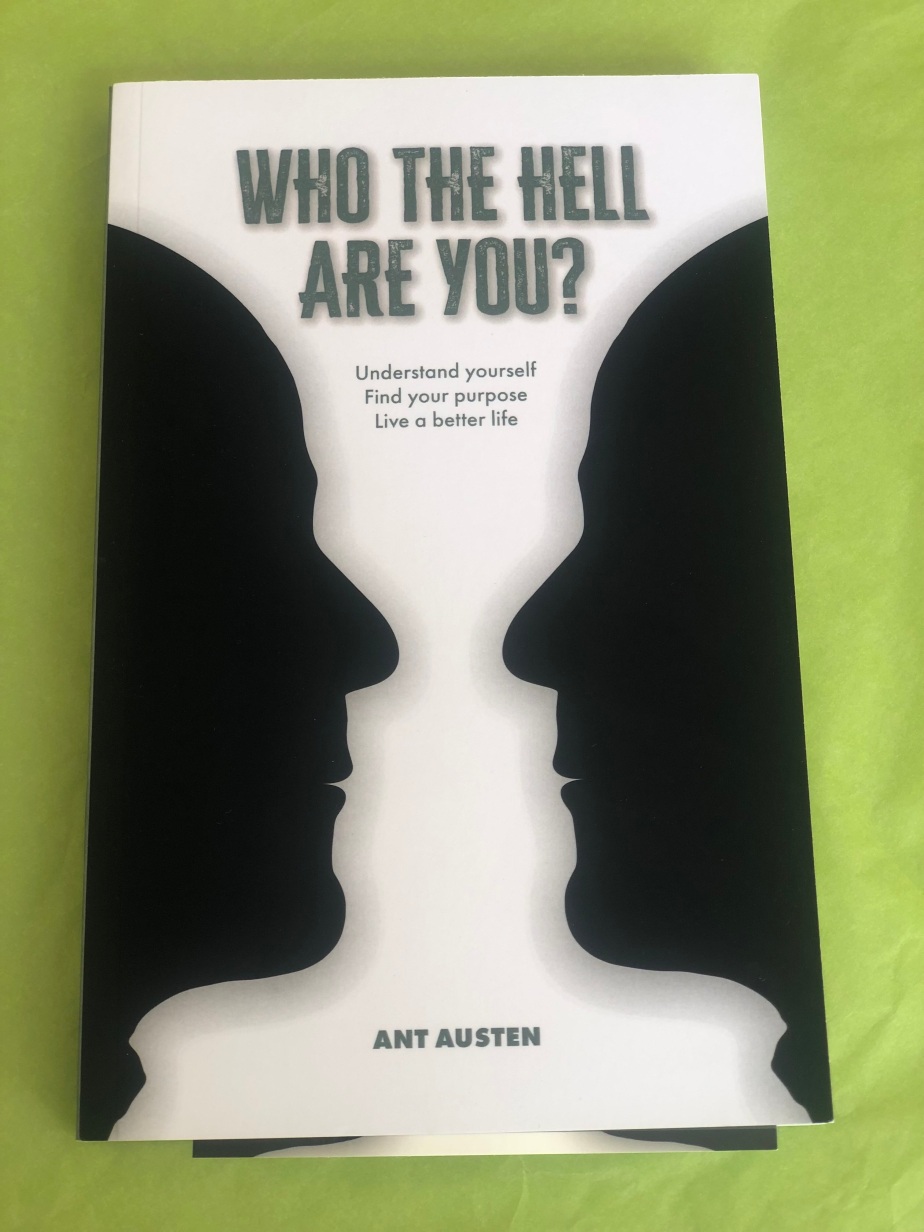
Who the Hell Are You? Book by Ant Austen

Disclaimer – We received this item free for the purpose of this review/feature but all words and opinions are our own.

Self development books rarely teach you something new nowadays nor are they well written but I couldn’t put down the new book from Ant Austen – Who The Hell Are You?

The premise of the book is to find out who you are, which let’s face it, most self-help books are about anyway. The way Austen approaches the subject is more engaging than most books though and that’s what’s kept me hooked. At this point in my life, I have read an awful lot of books and am looking for a new direction so the idea of finding out “Who The Hell Are You?” is both exhausting and poignant.  Austen talks from personal experience where he ran a removal business in the UK, was working weekend and every hour he could in order to fulfil the Hard work = success mantra but having no idea what success looked like to him, or what he was sacrificing. It’s a familiar story to many of us nowadays.

The book looks at several aspects of human psychology to both explain how we work, and to go through some exercises to find out what we want. To me, one of the lightbulb moments was when he was explaining about the Law of Attraction in a different way to how it’s been presented to me before and it suddenly made sense. The idea that when you feel good, you’re starting to work with The Law of Attraction. This cemented in me the need to be positive all the time (gratitude) and create good emotions all the time in order to be in the right place. The second principle that hit home was that the Law of Attraction works on like attracting like. So, if you’re in a good place, feeling good, then you are going to attract good people and good things, which translates into things you like.  It sounds simple but if you’re not understanding one aspect of the laws, the rest won’t work in the same way so you won’t get what you’re craving.  

The rest of the book works on your frame of mind, your habits, and then onto your structure of how you are going to improve life. It’s a book which you need to read several times (it even says that in the beginning) so that you pick up different aspects as you learn each new theory. There wasn’t much of the book that was new to me, but it was written and presented in a way in which I suddenly grasped the meaning and was able to tie together the different laws and how they work so that it builds up a better picture for me and where I want to go. I’ll be reading the book several times over the summer to keep solidifying the ideas. I hope there’s a second book soon!

Socials:

https://www.facebook.com/ant.austen

https://www.instagram.com/ant.austen

http://linkedin.com/in/ant-austen-03640142

Free Workbook:

https://offers.bethelimitlessyou.com/free-chapter

Available from £11.99 at: https://www.amazon.co.uk/Who-Hell-Are-You-Understand/dp/B0CWRXQHJH
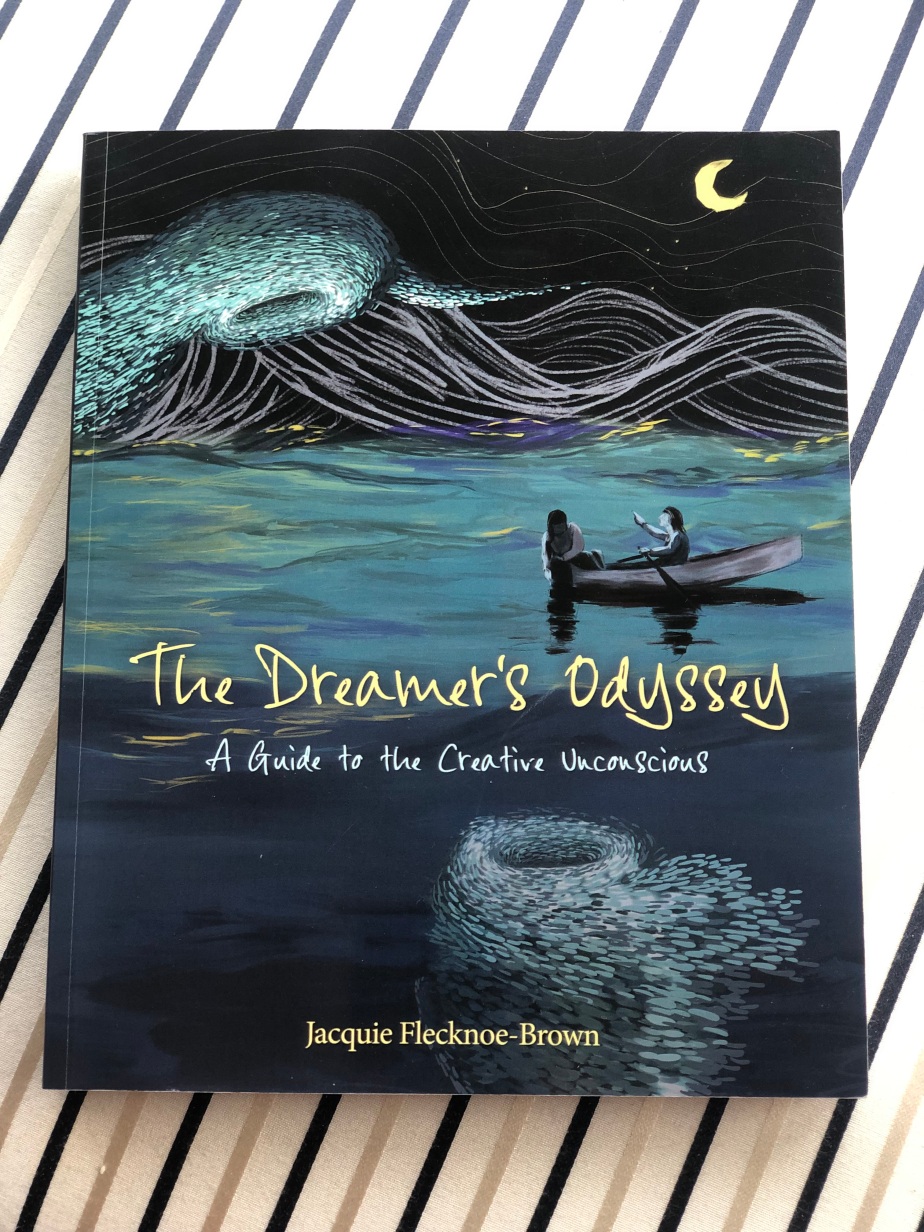
The Dreamer’s Odyssey by Jacquie Flecknoe-Brown

Disclaimer – We received this item free for the purpose of this review/feature but all words and opinions are our own.

Have you ever wondered what your dreams mean? Or have you looked into their meaning and got lost, unable to identify what the dream book is trying to tell you?  Jacquie Flecknoe-Brown’s book The Dreamer’s Odyssey uses Carl Jung’s finding to read into the symbolism of dreams.   The book relies heavily on Jung’s work and goes into depth about how to read your dreams, work with symbols and mythology and updates the reader on findings from more recent studies.

Jacquie Flecknoe-Brown works as a Jungian Analyst in Melbourne, Australia and has a wealth of knowledge about dream deciphering.  The book is cleverly divided into 10 weeks, starting with the background on dream analysis but explaining how important it is to keep a record of your dreams, even if you wake up in the middle of the night and think you’ll remember It (you won’t!) and explains how to make a diary of dreams. Interestingly, when you make the decision to start analysing your dreams, that first night’s dream is very significant, so pay attention to the details in order to be able to analyse the meaning not only the next day, but in several weeks or months in the future.  Buying a diary or journal specifically for dream analysis would be really advantageous whilst working through the book, and brings up a lot of interesting ideas for you to deal with.

The whole book is split into 10 chapters, with each chapter relating to 1 weeks’ worth of work into your dream analysis. The first few chapters teach you about the structure of dreams; a beginning, middle and end and what all dreams contain in terms of certain content. This could be events from the day, themes in your life or some kind of symbolism, which is specific to your background or culture.  Most of the chapters have a sub-section where counsellors and professionals can gain further information into that chapter and how Jung researched or identified certain issues and patterns. It’s not so in depth though that it can’t be understood by you and me, and there are ideas in each chapter that you can come back to.  Luckily, there’s also a section in each chapter for some personal writing to make notes on what you’ve read or perhaps how it related to one of your specific dreams. The book also has exercises to help you understand some of the theories, which is also useful as you start to take dream analysis more seriously.

The second half of the book related to The Method. This is more about how to analyse dreams rather than just explaining the background to analysis or how to record our dreams. It goes into depth about individual’s psychology and whether you’re an introvert or extravert, in the terms of Jung’s work, not necessarily what we understand of the meanings today. Examples of dreams are also dotted around the text to help you hone your analysis skills which is also helpful. Lastly, the final chapters are called Making It Real and talk about putting your analysis into practice and using what you’ve learned.  

The Dreamer’s Odyssey is a fascinating book with real depth and useful exercises, making use of an endless too – your own dream world, to be able to analyse your life and your world. It’s a skill that will last a lifetime and the bonus of having the Jungian teaching explained in detail makes the book even more useful and worthwhile.  

Available from £7.50 at: https://www.amazon.co.uk/Dreamers-Odyssey-Guide-Creative-Unconscious/dp/1911383353/ref=sr_1_1?crid=1XQ0VE62L6IKA&dib=eyJ2IjoiMSJ9.8IaRkVlFm7oZEa1kNEjOkqL3oGtbyXwmoor92WqEXWeRieolf2f8LUWtRaJS9CRavRh2fcOWyttCb7m4oo-OiAEj7_-P2q0k54Q2AQ-k-2sBR6KIMhpe-D0R28MUPE7O5Mzr_gPVs9nWIJPizzu7hEew1PJPcsWkGVMLN_H75Uep5raEeowpBktpGYuhwI7tPUz2TJ7lKPOgju6sl0qp1Zm1oMTkClHZL4zSsNuHnTQ.gPdEmP-Ym0skXyfsCez7hPuzBOohQDJZLGqj6jgtMx8&dib_tag=se&keywords=the+dreamers+odyssey&qid=1712557124&sprefix=the+dreamers+ody%2Caps%2C99&sr=8-1

Generation Hope – Book

Disclaimer – We received this item free for the purpose of this review/feature but all words and opinions are our own.

By Arunjay Katakam

Following Generation X and Millennials, the post-pandemic generation are starting to make their mark in terms of economics and we see in Generation Hope, but Arunjay Katakam how we have got to this point and where it is likely to go.

During the 1980s, the mantra was ‘greed is good’.  No way would this saying be accepted in business any longer however the sentiment is still there with an uber-capitalist market out there except now there are 40 plus years of capitalist decisions, recessions and now a pandemic which have changed the face of finance across the world for good. What are the newest generation’s challenges now, and what area they likely to be?

Author Katakam takes us on a little journey through the history of the last century to the point now where as a world, we are under paid and over worked to a degree which we’ve never seen before. Things are looking to change though, as the new workforce, mostly working from home, seek more of a work/life balance but also appreciate working for a business or industry that believes in community and people, and not about just profits.  However, undoing all those decades of greed is going to take some time and the book explores how old-school economists are being replaced by Inclusive Economics and how everyone can benefit from it.

Arunjay Katakam’s book is sliced into three parts; 1. The Scale of the Problem, 2. The Shape of Change and 3. The Scope of Impact. Each section has easy to understand chapters,  complete with footnotes for anyone who isn’t an economist, and the odd quote or diagram to help explain along the way.  Katakam takes the time to look at what the problems are and how they came about and then directs the reader to how things could look in the future, if change might happen. 

The book is a modern day look at how we operate finance and economy nowadays, and essentially where it is going wrong. The speed of change which has been instigated by the internet and social media over the last 20 years means that the models that used to be applied are now no longer relevant and change is needed. For anyone interested in economics or studying the subject, Generation Hope adds seasoning to the commentary on wealth today and brings the reader up to date with how those Billionaire made it… and where they are likely to end up.

Further details:

Arunjay Katakam

Insta – @arunjay.katakam

X – @arunjay

#Genhope

From £14.99 at: https://www.waterstones.com/book/generation-hope/arunjay-katakam/9781955671347